Four days · Two full days
The route
I arrived late on the first day and had to leave early on the last. That gave me only two full days to explore, so I tried to cover the places I had marked before the trip without turning every day into a checklist.
Open the complete route in Google Maps
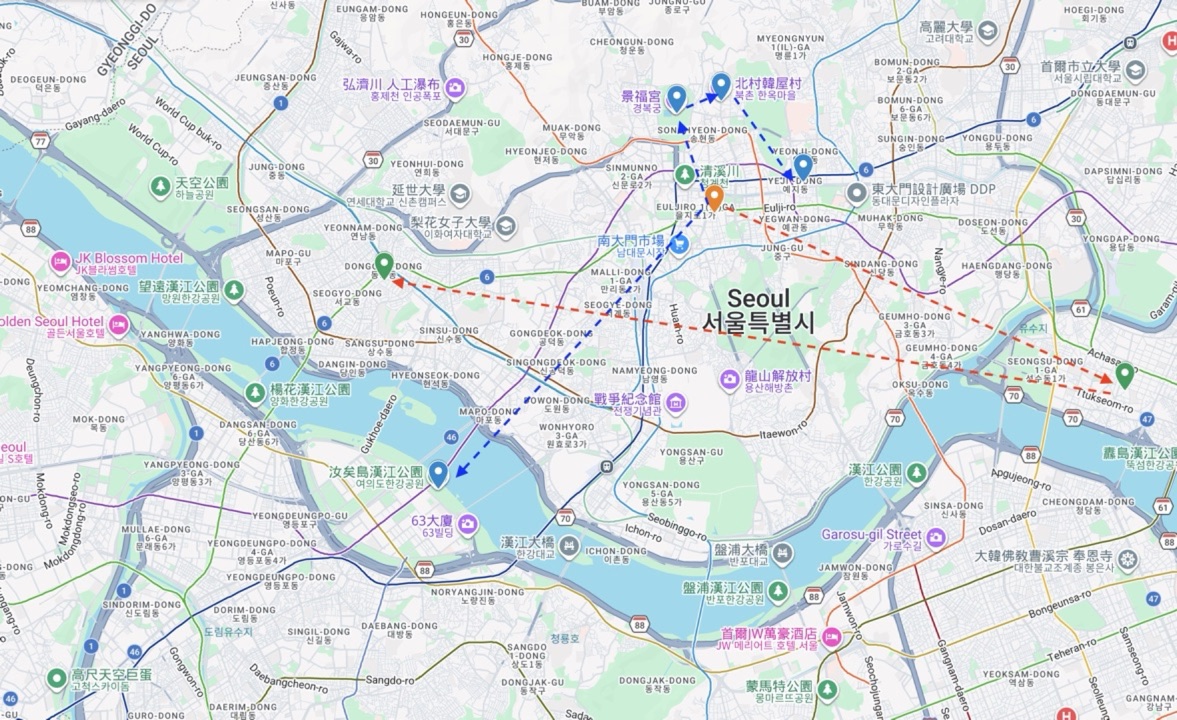
- Day 1: Arrive in Seoul and settle into Myeong-dong.
- Day 2: Gyeongbokgung Palace → Bukchon Hanok Village → Gwangjang Market → Yeouinaru → Hangang cruise.
- Day 3: Seongsu-dong → Hongdae → a rainy walk back through the city.
- After Seoul: Incheon waterfront → Sinpo International Market.
Day 1 · Arrival
A rough arrival and a welcome surprise
I arrived at around 5 PM and took the Airport Railroad all the way to Seoul Station. My hotel was in Myeong-dong, not far from the station, but I still arrived quite late.
Since this was my first trip to Seoul, I was unfamiliar with the local transportation system. I initially planned to take a bus to the hotel, but after waiting for half an hour, the driver would not let me board because of my luggage.
I took a taxi instead. Although I had no cash, I paid the fare of about 8,000 won with T-money on Apple Pay. The driver told me that T-money is accepted on public transport and at convenience stores.
Eventually, I reached Drip & Drop, a capsule hotel. At around HKD 200 per night, it was inexpensive, yet both the rooms and shared areas were surprisingly clean. Hardly anyone spoke at night, so it was quiet and I slept well. The lobby coffee was slightly acidic rather than bitter, which I really liked.
A late dinner in Myeong-dong
By the time I settled in, it was almost 9 PM. About 200 metres from the hotel, I found Nangman Restaurant, run by an elderly woman. Many locals were eating there, which seemed like a good sign.
She first served pickled radish and kimchi, and I ordered a bowl of Korean cold noodles for 9,000 won.
Myeong-dong after dark
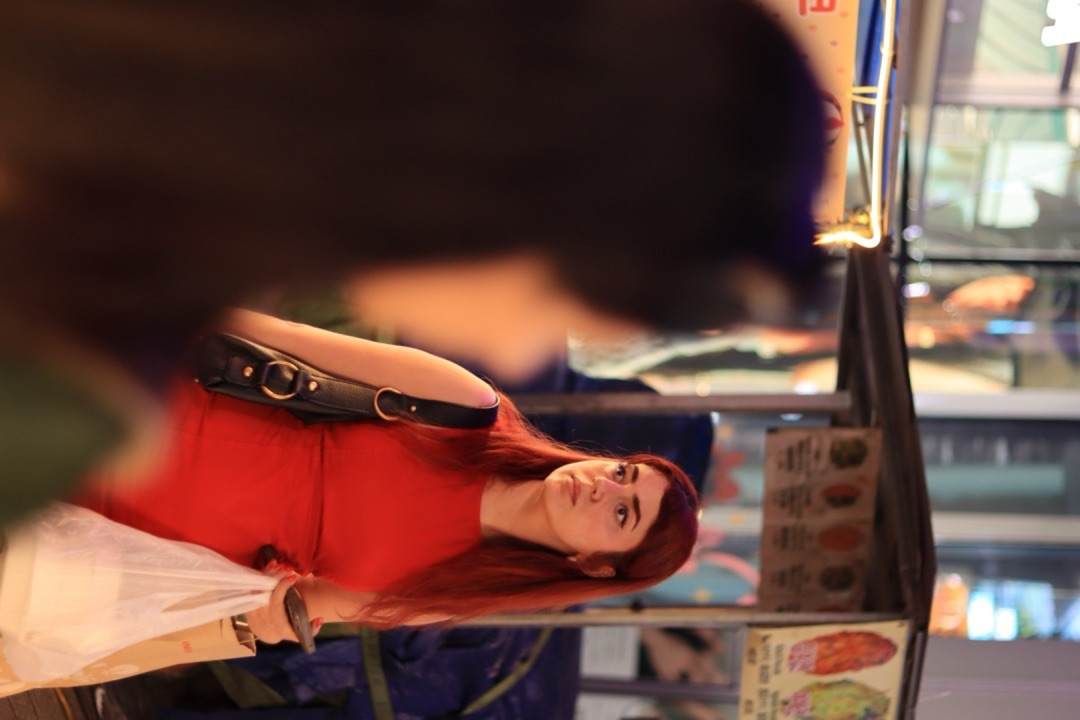
Even close to 11 PM, the streets were full of people, food stalls, and shops that were still open. Behind the bright signs were the people who kept the neighbourhood moving, while visitors wandered, ate, shopped, and rested along the way.
Day 2 · Palace to river
From the palace to Hangang
My route passed through Seoul's old centre before ending at the Han River. I wanted to visit the places I had marked before the trip without rushing past everything between them.
Breakfast
I began the second day with a plate of kimbap before heading into Seoul's old centre.
Gyeongbokgung Palace
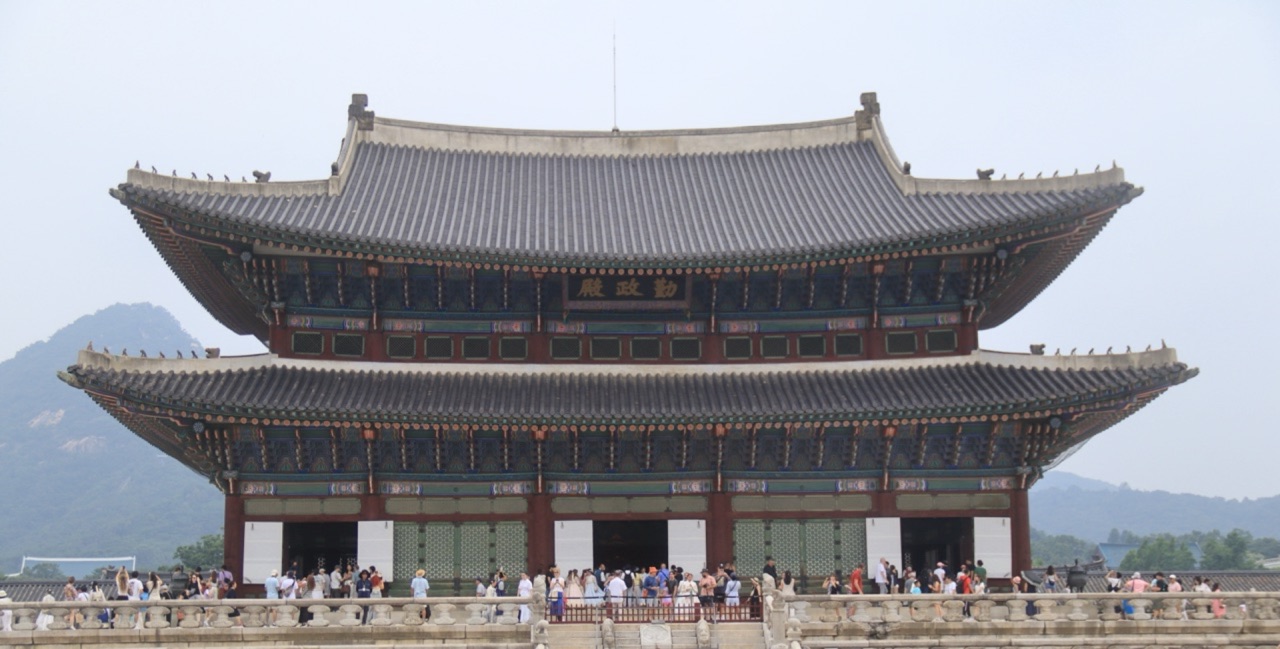
After breakfast, I headed to Gyeongbokgung, a traditional Korean palace and one of Seoul's best-known historical landmarks. It once served as the residence and workplace of Korean kings.
Several performances are held on the palace grounds each day, recreating scenes involving Korean soldiers from the 15th century. As I walked through the palace, I saw many Western visitors wearing hanbok.
The pond was beautiful and home to plenty of wildlife, including ducks. When I left through the rear gate of Gyeongbokgung, I saw Cheong Wa Dae, the former workplace and residence of the South Korean president.
Bukchon Hanok Village
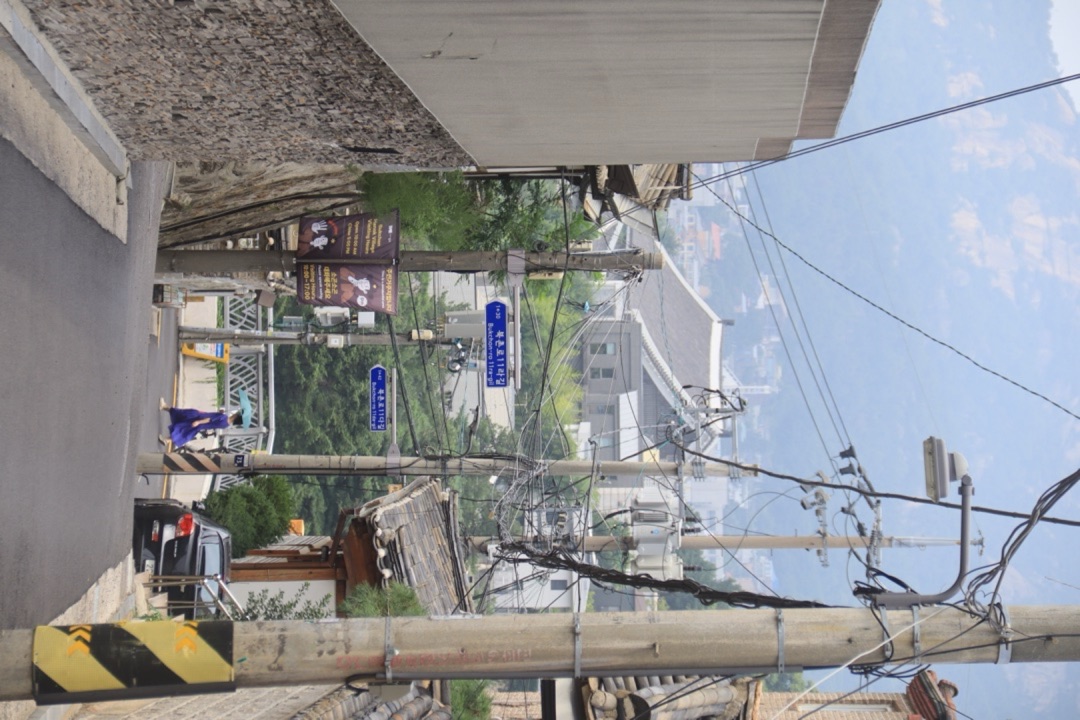
I then walked to Bukchon Hanok Village, a traditional Korean neighbourhood spread across hilly streets. Many tourists were taking photos there.
Gwangjang Market
I then went to Gwangjang Market for lunch. I tried live octopus; you can find a photo in the food section. Personally, I did not like it because it had very little flavour, and the oil-based dipping sauce was too salty for me.
Still, I would recommend trying it if it is not commonly available where you live.
Yeouinaru
Later, I took the subway to Yeouinaru. It became one of the most memorable places on the trip.
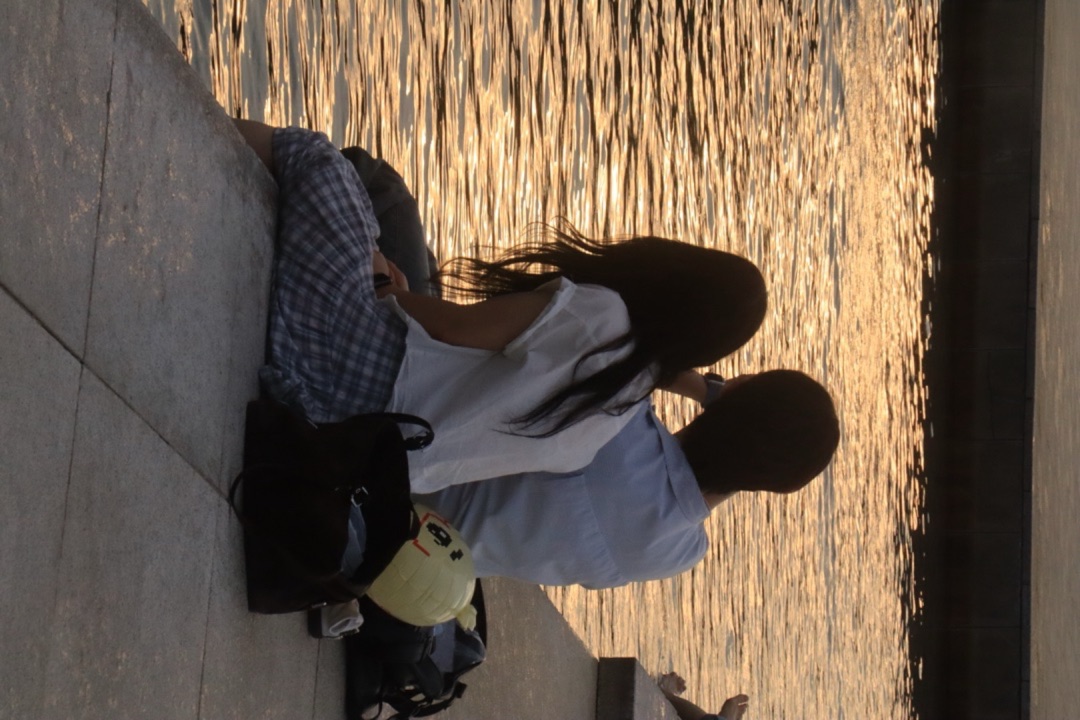
The park felt like a place for Seoul locals. I saw people camping, walking, exercising, taking photos, or simply spending time with their families and enjoying the sunset along the Han River.
I also bought a bowl of ramyeon near the dock, just as I had seen people do in Korean TV dramas.
Hangang cruise
I then took a Han River cruise, which cost about 39,000 won. I was initially shocked by the price because my notes had led me to expect it would cost only about 3,000 won.
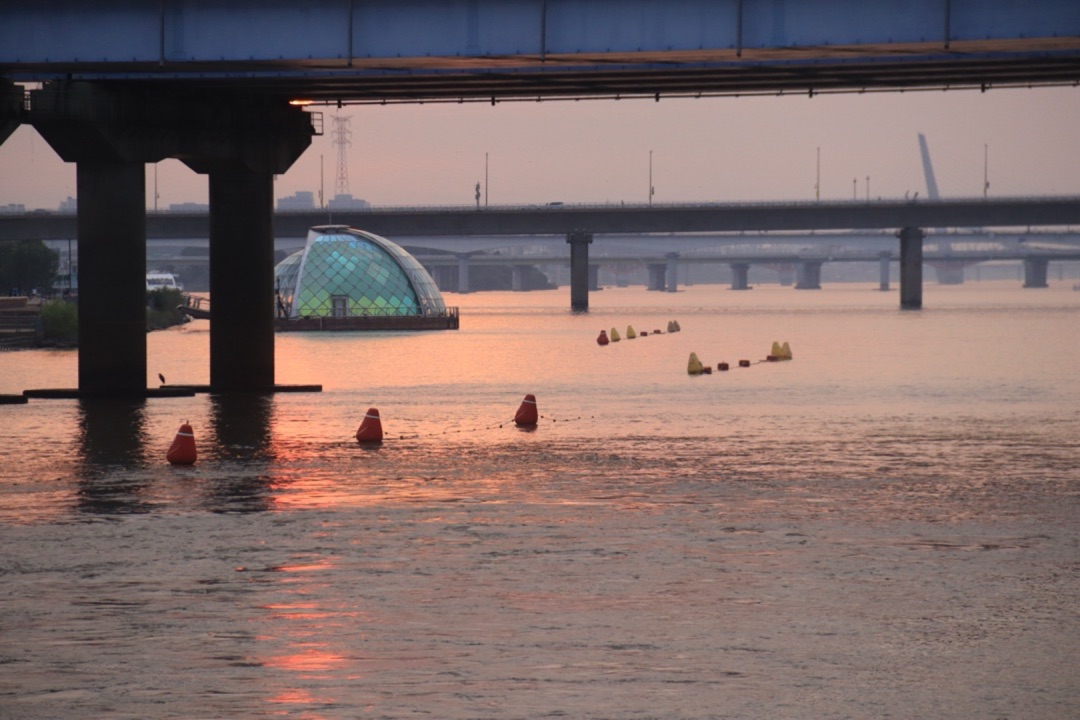
However, the scenery made it worth the price. I enjoyed moving along the river and seeing the bridges and surrounding buildings up close. The 70-minute cruise was worth it.
Day 3
Walking the streets of Seoul
Seongsu-dong
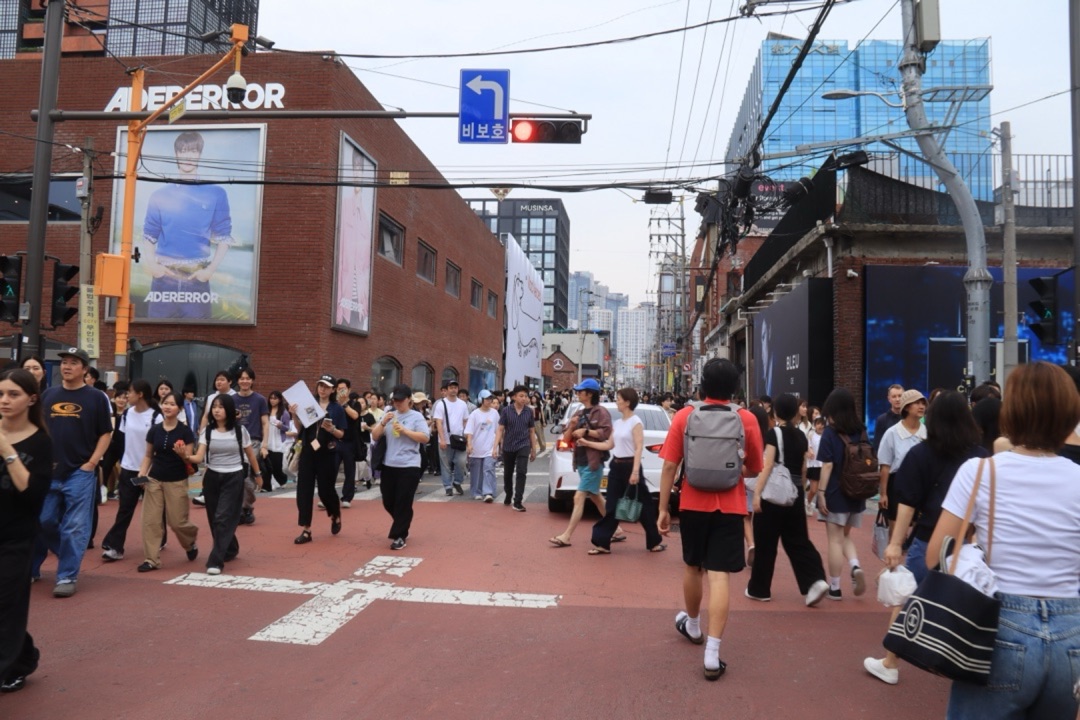
I spent the third day walking, beginning in Seongsu-dong. The neighbourhood felt younger and less formal than the palace district, with shops, cafés, and streets that were more interesting than any single destination.
Hongdae
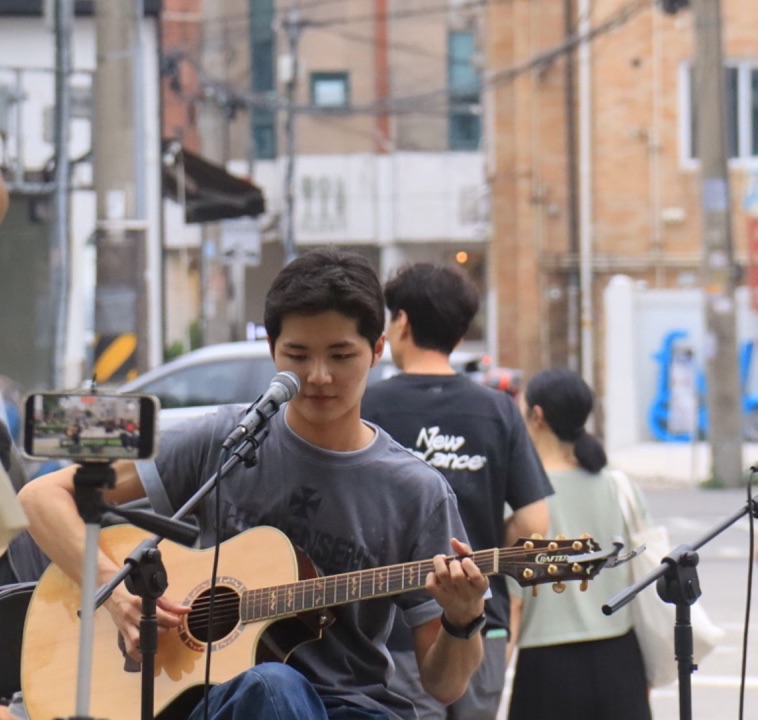
I continued through Hongdae, where the same lively, informal rhythm carried into another part of the city.
Back
I had planned to visit the area around Seoul Tower, but the rain had emptied the streets and I did not feel entirely safe, so I turned back. My phone was nearly out of charge and I could no longer keep Google Maps open, but by then I knew the general direction.
By chance, I came across the same old palace I had seen from the taxi on my first evening. Finding it again without a map made the trip feel as though it had quietly looped back to the beginning.
Leaving
I got up at around 7 AM. Now familiar with the subway, I took Line 2 to Hongdae and transferred to the Airport Railroad for Incheon Airport. The whole process was quite smooth.
After Seoul · Incheon
An unexpected Incheon stopover
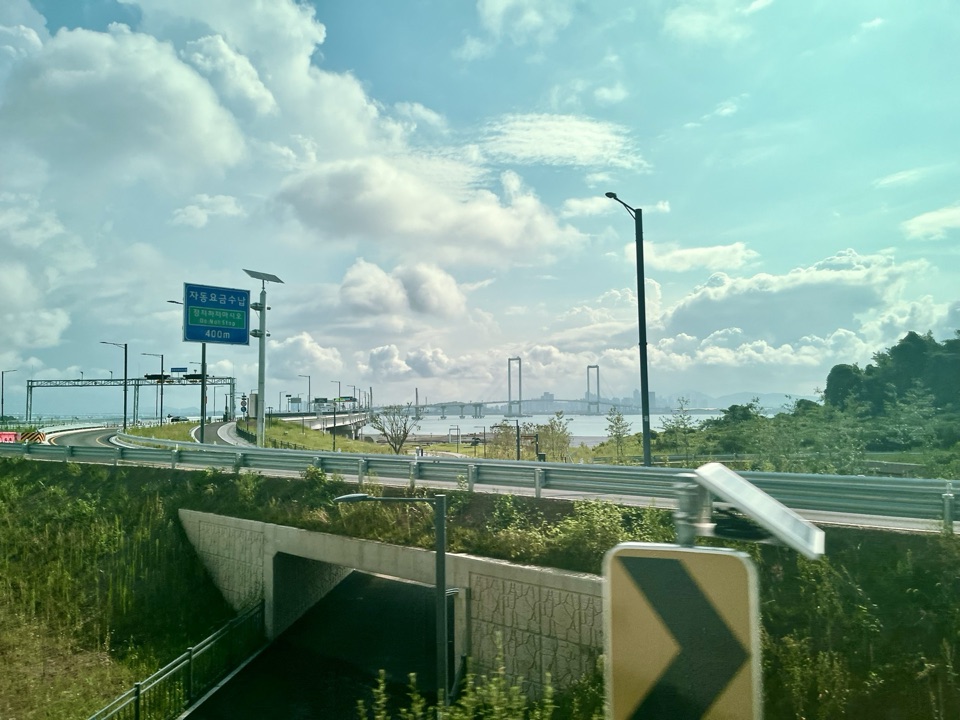
On my way back from Los Angeles to Hong Kong, I had a connecting flight through Seoul. I had originally expected to spend only about five hours at the airport. However, my flight was delayed by around 12 hours because of a typhoon in Hong Kong.
I found a three-to-four-hour tour of nearby sights and quickly signed up for the Incheon tour. It turned out to be a lucky detour: the guide was friendly, and the tour never felt rushed.
Tasted along the way
Food in Seoul
Food marked the rhythm of the trip, from a late bowl of cold noodles in Myeong-dong to kimbap. Food was inexpensive compared with Hong Kong, and I enjoyed almost everything I tried except the octopus.
- Korean cold noodles at Nangman Restaurant (9,000 won)
- Kimbap for breakfast (6,000 won)
- Octopus (17,000 won)
- Ramyeon by the Han River (5,000 won)
- Tteokbokki, or spicy rice cakes (4,600 won)
- Pork spine soup (12,000 won)
- Spicy fried chicken (about 25,000 won)
- Soft tofu stew (12,000 won)
- Steamed dumplings at Sinpo Market (6,000 won)
- Warm egg tarts in Incheon
These dishes were only a beginning. Recommendations for the next trip are welcome.
Found along the way
Poems in Seoul
I found two poems written in Korean around Seoul: one in Bukchon Hanok Village and another at a subway station. I used Gemini to translate them, and the translations became another way of remembering the places where I stopped.
English translation · Happy While on the Road, by Kim Tae-jin
Green onion flowers bloom beside the round universe When apricot tree fruits hang overhead Even if I have nothing, I am happy as long as I can walk. When birds sing and brighten below the clouds When stones are baked like bread in the sunlight Looking at pumpkin flowers sitting and resting like birds The scent brushing the tip of my nose is fragrant because it is empty. That light green of the mountains becoming light like playing badminton Even with no one to wait for, the tree always stands outside the door. A small window in the mind contemplating the roads The stars that easily fall asleep against the window can all twinkle. Showing a single thorn that can't pierce anything The wild rose crosses the fence before you know it Outside the fence is late summer Crossing over as if crossing the fence of the mind's boundaries The two walking legs are happy while on the road.
English translation · Dung Beetle — Mother, by Woo Joong-hwa
The dung beetle rolls cow dung and horse dung. It rolls elephant dung, snake dung, and mouse dung too. In the distant past, it even rolled dinosaur dung. It goes rolling with its back to the sun. It goes shaping it round and round. If there is no sun, it rolls by moonlight. At night, the North Star guides the way. It rolls on red clay roads, stony paths, and hillsides too. There is never a day it loses its way. Children play inside the dung.
With a little help
Acknowledgements
Thanks to Gemini and Claude for helping with translation and editing. Gemini also helped with directions and recommendations during my first visit to Seoul.